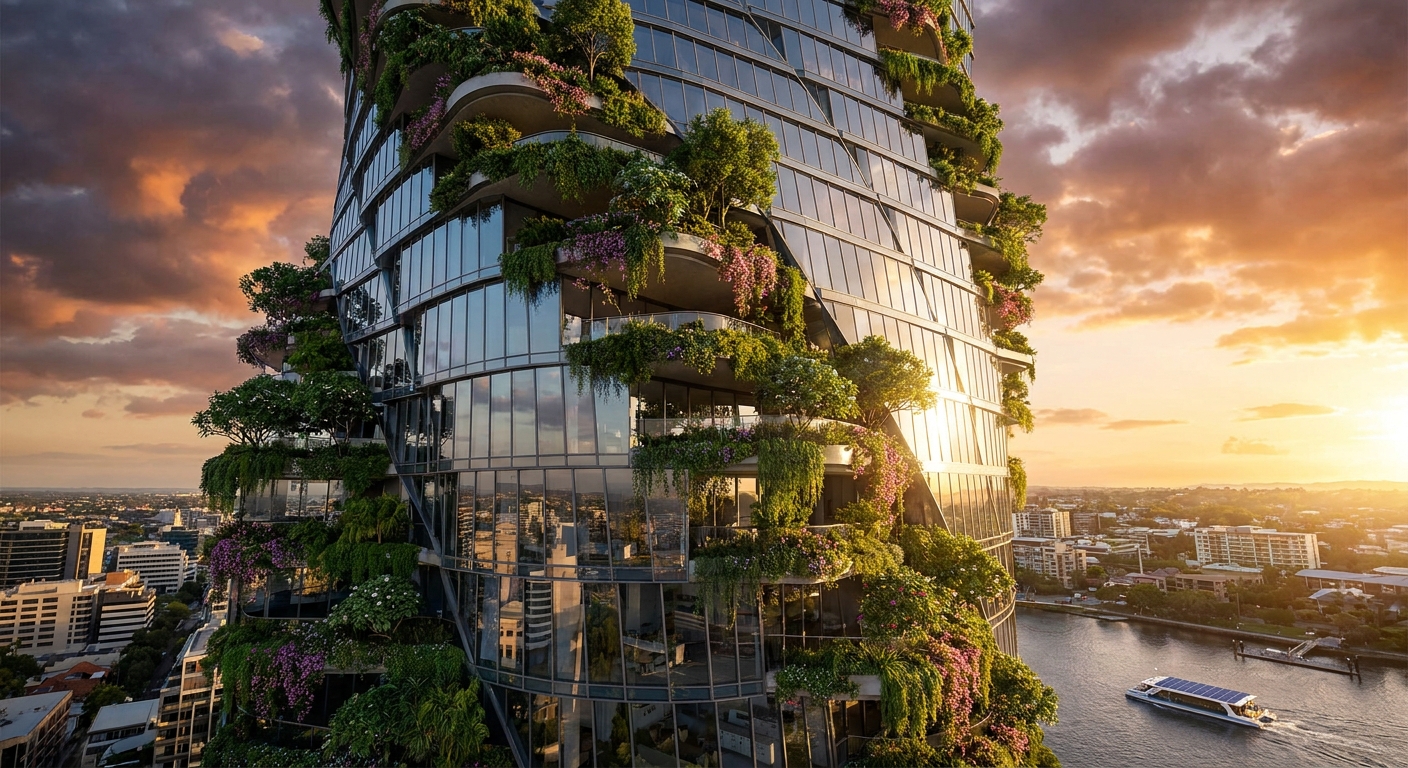
Sustainable Skyscrapers
Redefining the vertical city through ecology, technology, and human-centered design
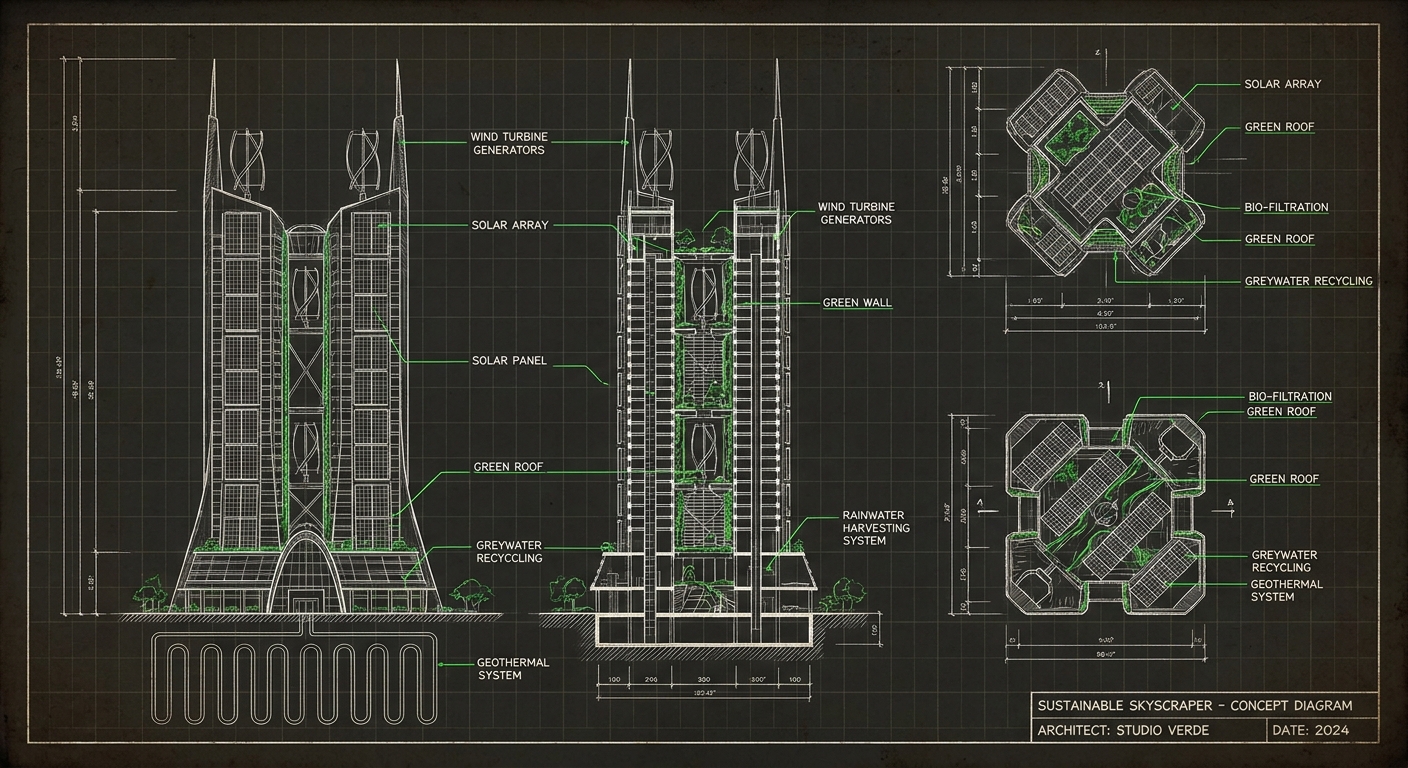
Buildings That Breathe
The sustainable skyscraper is not merely a building — it is a living ecosystem. Conceived at the intersection of architecture, ecology, and engineering, these towers reimagine what it means to build upward without leaving a destructive footprint behind.
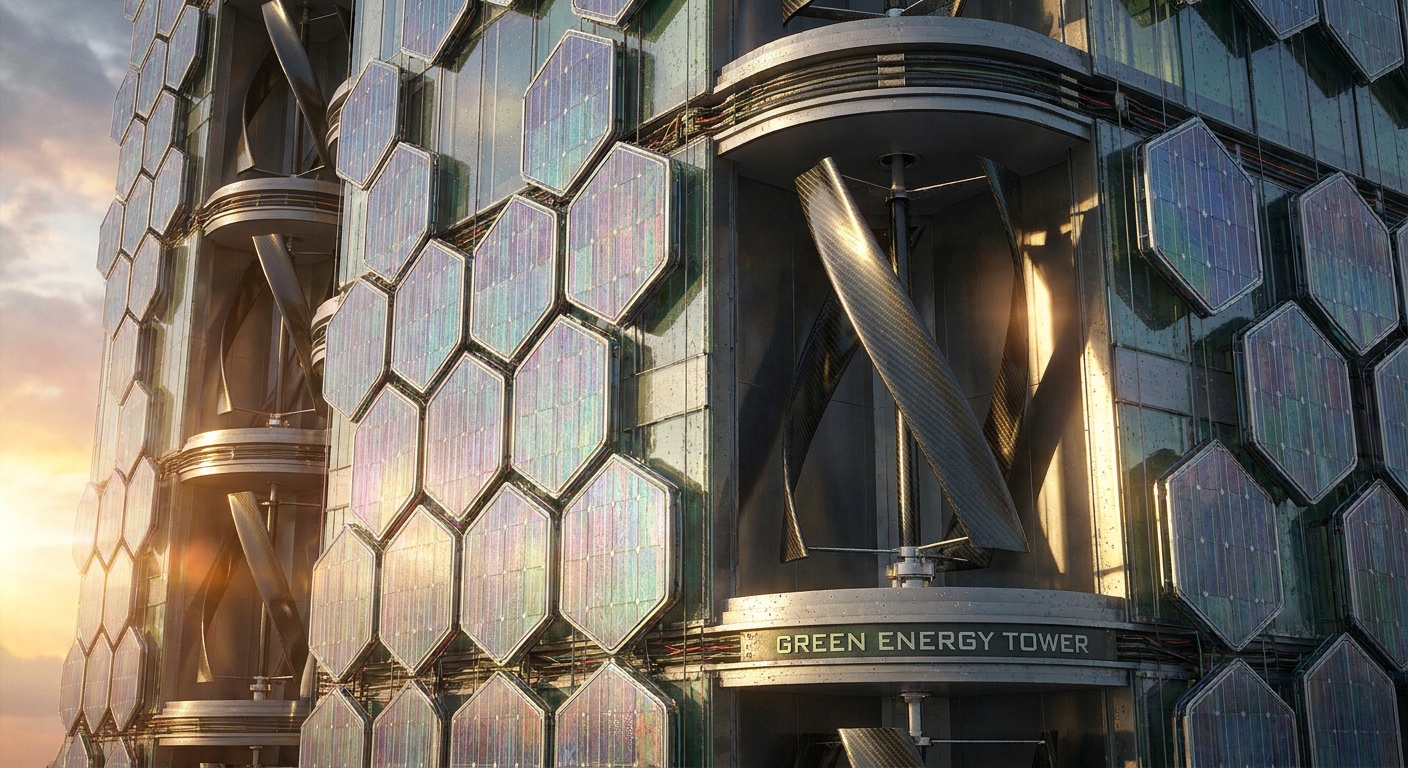
Harvesting the Sky
Integrated photovoltaic glass facades, micro-wind turbines at upper floors, and piezoelectric flooring transform every surface into a power source. Next-generation buildings generate more energy than they consume.
- ◆ Building-integrated photovoltaics (BIPV)
- ◆ Vertical-axis wind turbines
- ◆ Geothermal heat exchange systems
- ◆ AI-optimized energy distribution
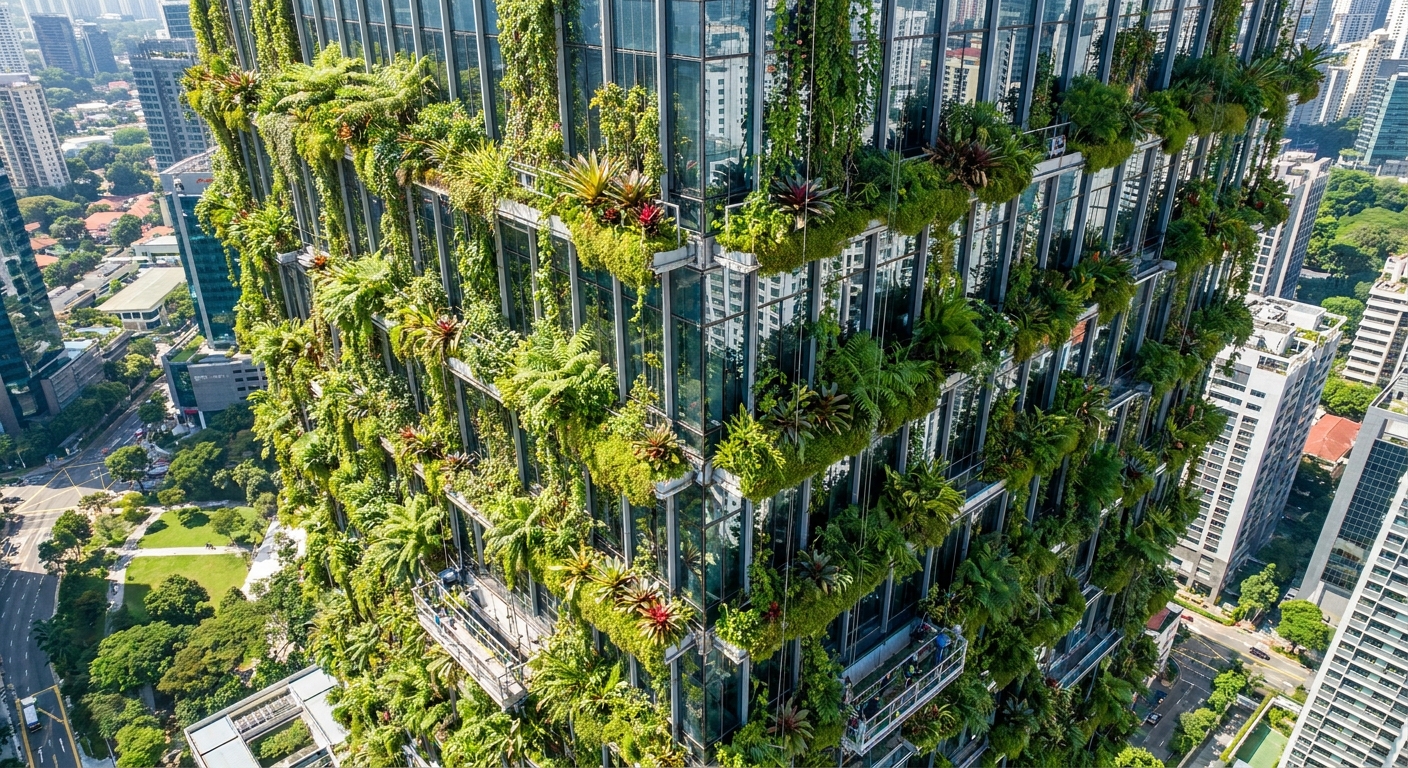
Vertical Forests
Living walls and sky gardens don't just look beautiful — they actively filter air pollutants, reduce urban heat island effects by up to 8°C, and provide critical biodiversity corridors in dense urban environments.
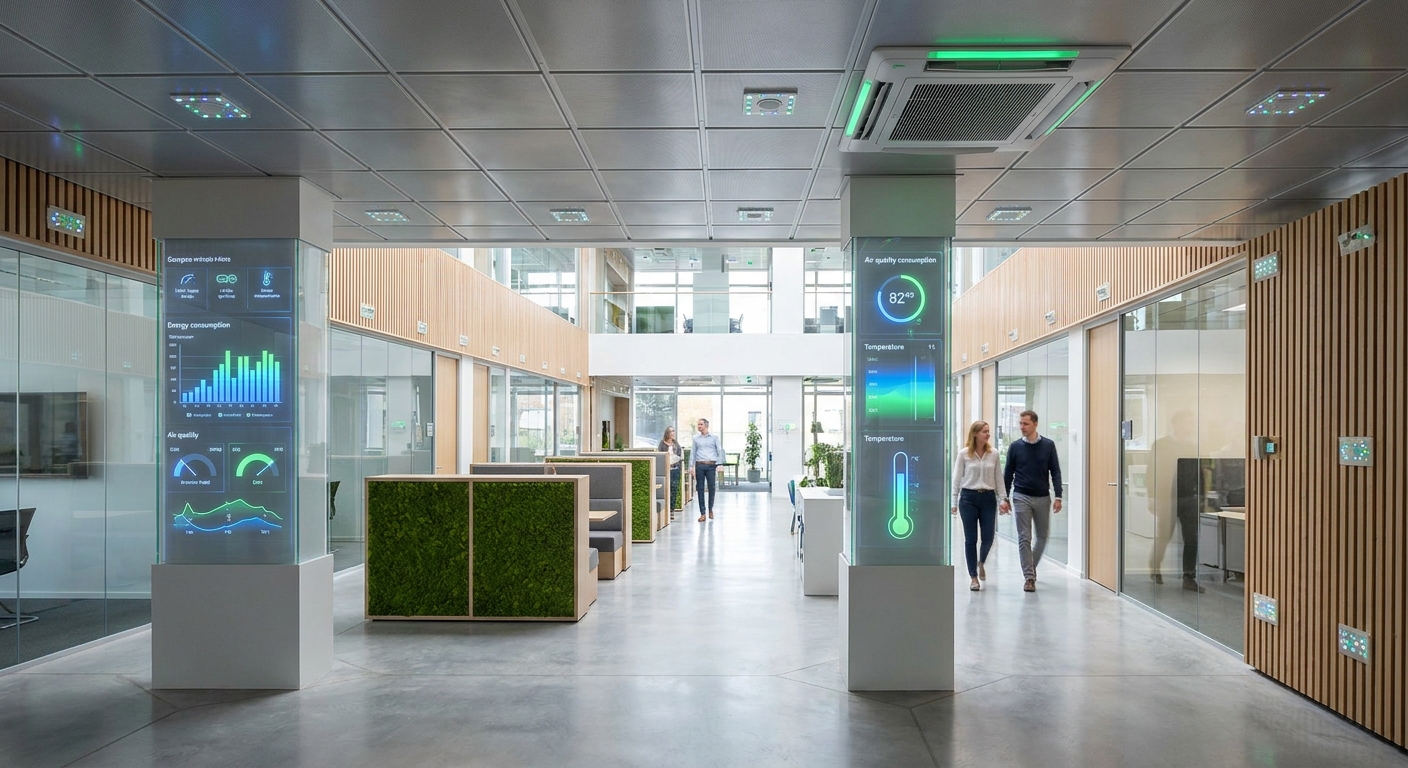
The Smart Nervous System
Thousands of embedded IoT sensors monitor temperature, air quality, occupancy, and energy flow in real time. Machine learning algorithms continuously optimize every system — from HVAC to lighting — reducing waste by up to 40%.
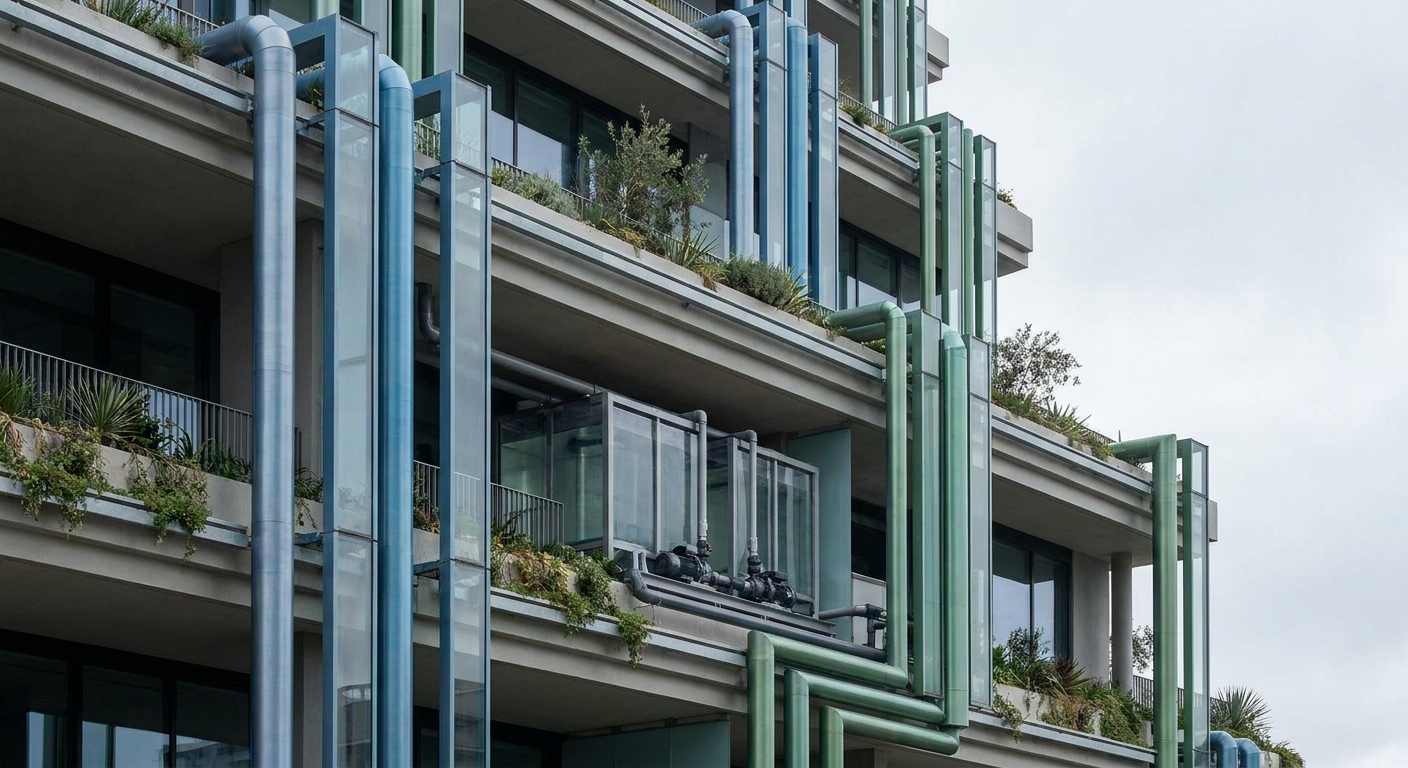
Closed-Loop Water Cycles
Rainwater harvesting facades, greywater recycling systems, and atmospheric water generators create a near-zero water footprint. A single sustainable tower can recycle up to 90% of its water consumption.
- ◆ Rainwater collection & filtration
- ◆ Greywater recycling loops
- ◆ Atmospheric water generation
- ◆ Smart irrigation for green walls
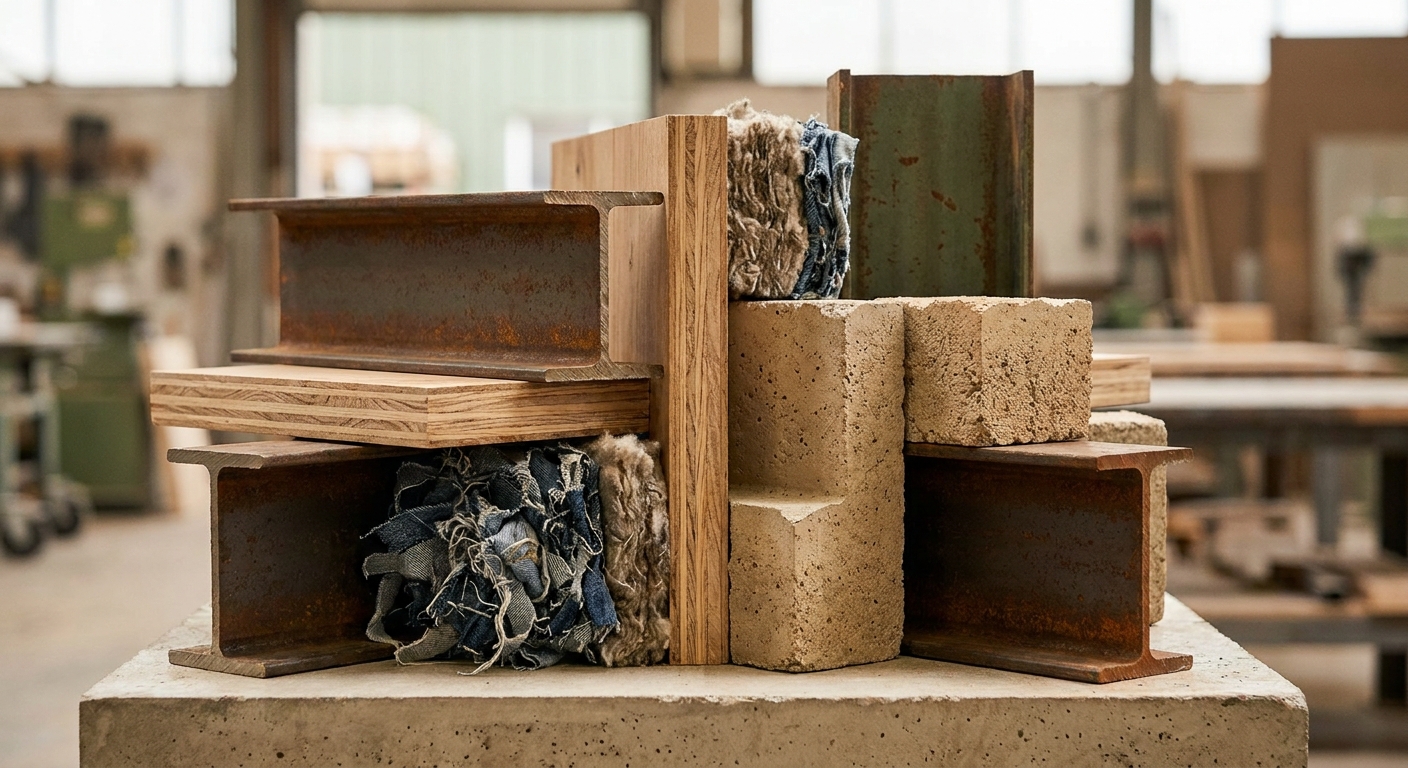
Built from the Earth, Returned to It
Mass timber, bio-concrete, recycled steel, and mycelium-based insulation replace carbon-intensive conventional materials. Cradle-to-cradle design ensures every component can be disassembled and reused.
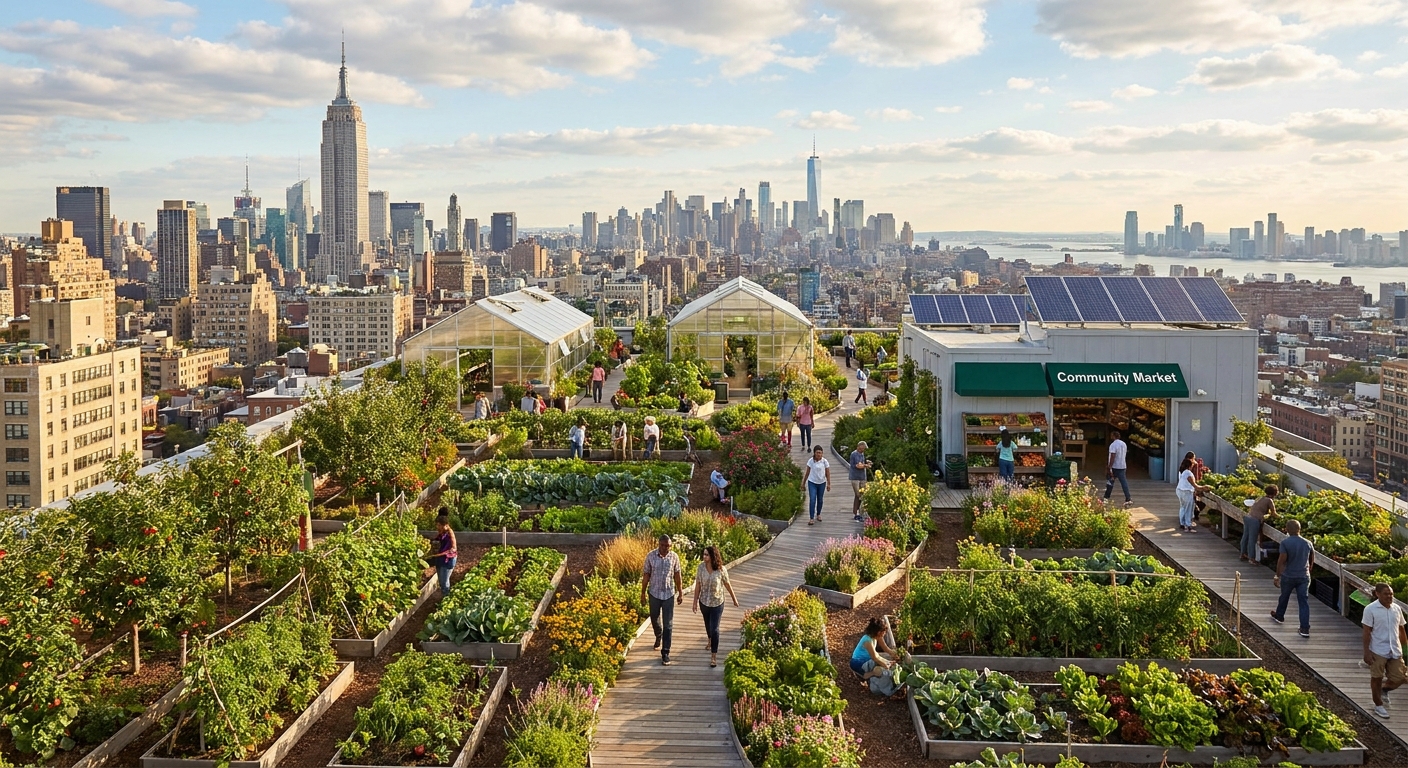
Sky Gardens & Social Spaces
Rooftop farms, sky parks, and communal terraces transform skyscrapers from isolated towers into vertical neighborhoods. Urban agriculture floors can supply up to 30% of a building's food needs.
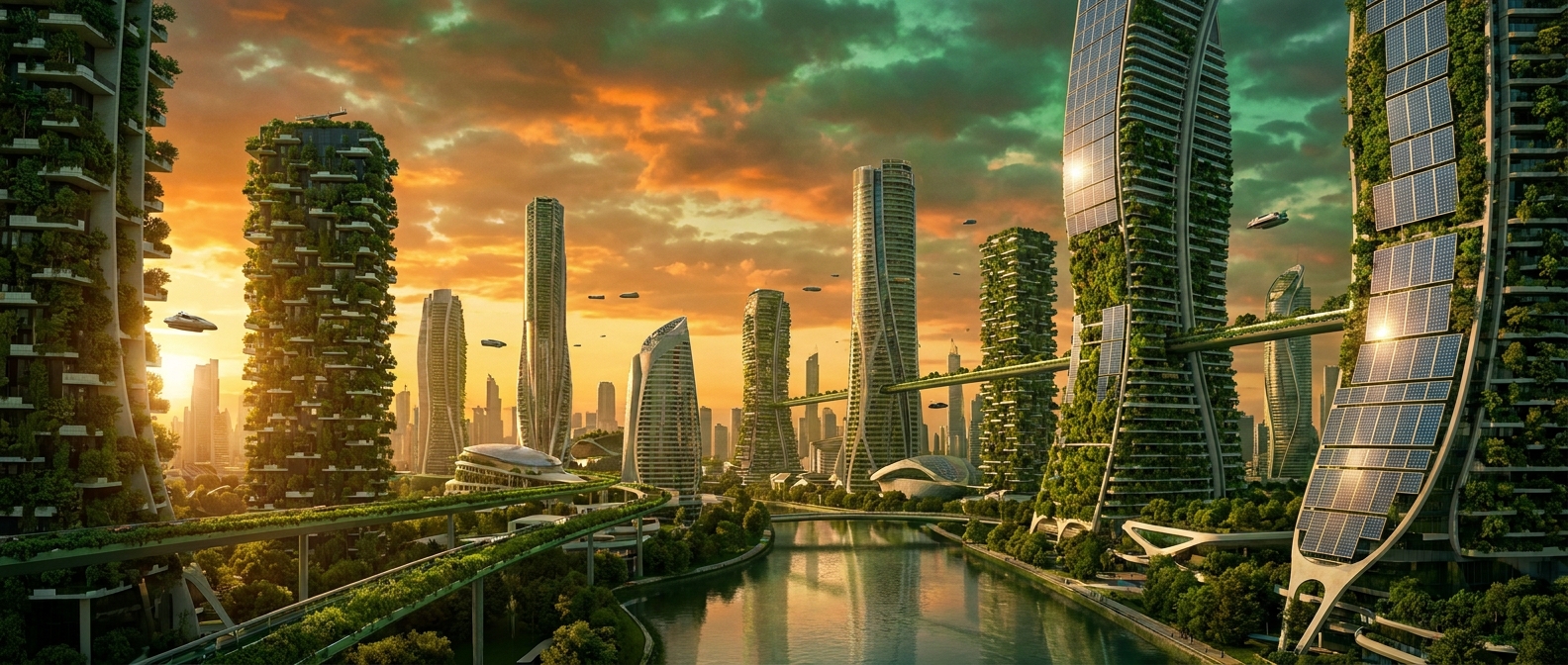
Cities That Heal the Planet
By 2050, over 68% of the world's population will live in cities. Sustainable skyscrapers are not optional — they are the only viable path to a livable urban future. Every tower built green is a declaration that progress and nature are not opposites.
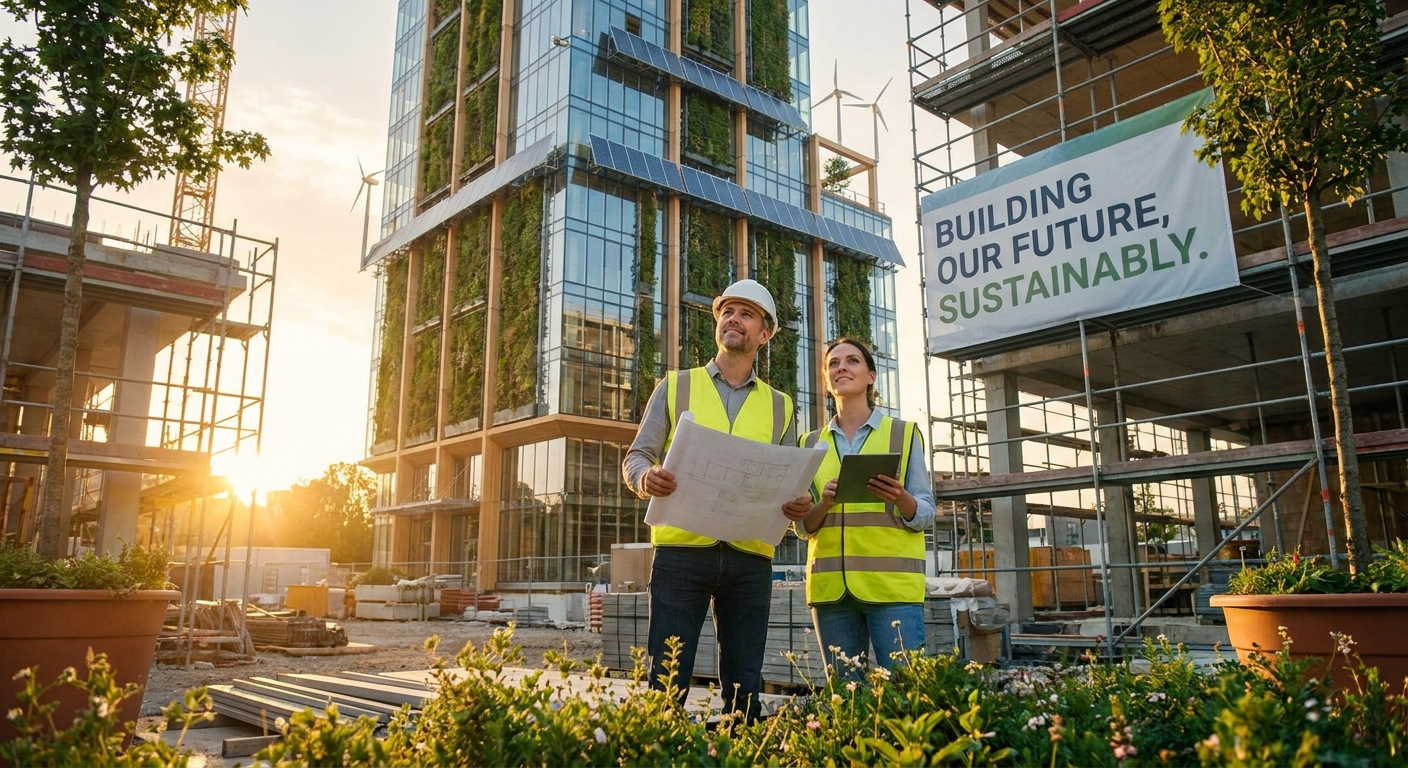
Build Green. Build High.
The sustainable skyscraper is not a distant dream — it is an architectural reality being built today. Every decision made in design, materials, and technology shapes the world our children will inherit.